
The M7 Public Art Collection
In 2026, a new collection of large-scale public art was installed along the Westlink M7 Motorway between Richmond Road, Oakhurst and the M5 Interchange at Prestons, as part of the M7-M12 Integration project. The M7 Public Art Collection is part of a significant cultural moment for Western Sydney with an overarching theme of 'To protect Country is to belong' there are four main narratives underpinning the overall story.
The collection compliments the Remembrance Driveway and enriches the Westlink M7 Motorway landscape by inviting motorists into an immersive art experience which pays respect to our country's Aboriginal and Torres Strait Islander servicemen and women, focused on the universal human experience of belonging at the heart of a reflection on Australian war service.
The Project has partnered with leading Indigenous Design Studio, Balarinji, to deliver the Westlink M7 Motorway Public Art Collection. Balarinji developed the project’s themes and narratives through a Designing with Country framework in co-design with locally-connected Aboriginal knowledge holders, military veterans and a cohort of Dharug-connected artists.
The collection’s overarching theme is 'To protect Country is to belong' and there are four main narratives underpinning the overall story.
Key Narratives
- Frontier Warriors:
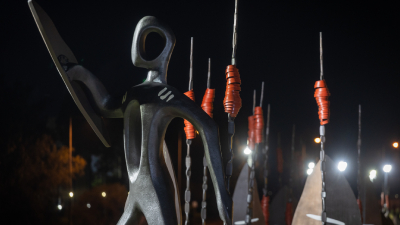
The Art Collection narrative begins with the Frontier Wars fought by Aboriginal and Torres Strait Islander peoples to hold and care for traditional Country. - Interconnection:
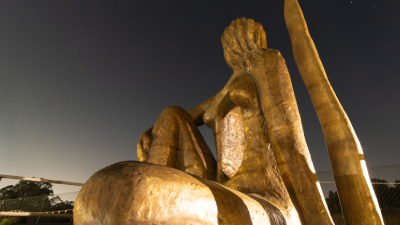
Next, the narrative honours Dharug matriarch Maria Lock, whose family fought in the Frontier Wars, her marriage to convict Robert Lock and their nine surviving children, from whom many Dharug people descend. Maria’s descendants fought in the World Wars and today they continue to uphold and enrich Dharug culture. - Together at war:
The next works acknowledge the furnace of World Wars where Indigenous and non-Indigenous soldiers fought together in a relationship of equality to protect Australia. - Service and reconciliation:
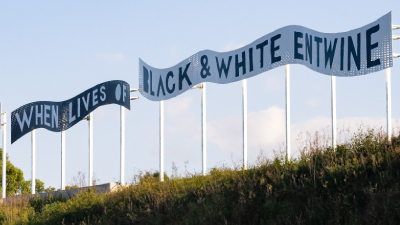
Finally, the story recognises how the spirit in which positive relationships were forged in war gives us hope for a reconciled, entwined future for Australia.
Artworks
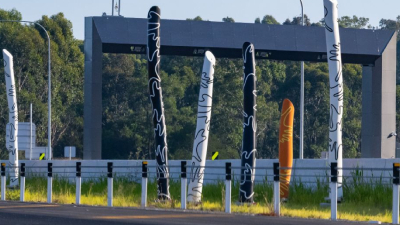
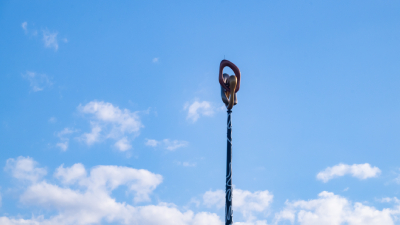
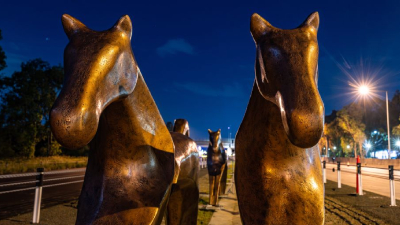
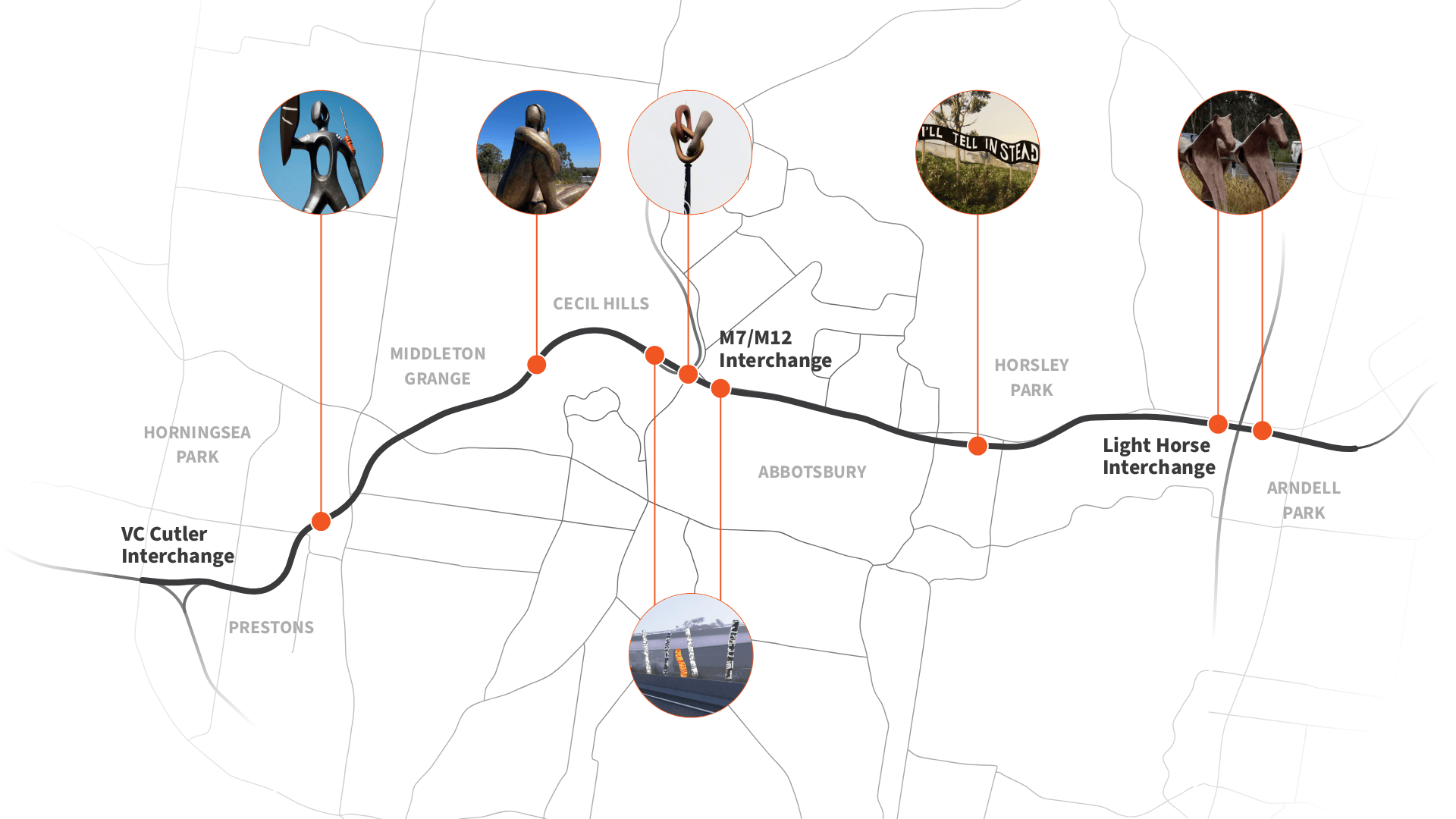
There are six main large-scale installations along 26 kilometres of the motorway located in the median and on motorway land either side of the lanes. There are also five artworks located along the M7 shared user path which are incorporated into the functional amenities of the path. You can find out more about the Shared User Path installations here: www.westlinkm7.com.au/about/shared-path
Artwork map
Artists
-
BALARINJI STUDIO
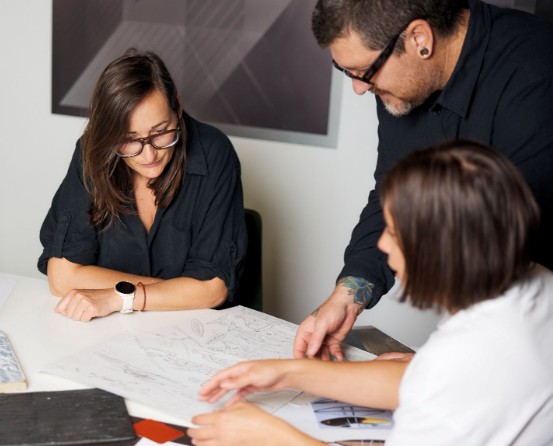
Balarinji is Australia’s leading agency for Aboriginal and Torres Strait Islander public art, design, strategy and engagement on major projects. An Aboriginal-owned business founded in 1983 on Yanyuwa traditions, and based in Sydney, Balarinji’s interdisciplinary work comes from authentic engagement with Aboriginal and Torres Strait Islander peoples, culture, art, stories and identity towards design and artistic excellence.
Balarinji curates, commissions and co-creates impactful, enduring works of public art. Its cultural authority is in the agency’s relationships with Aboriginal and Torres Strait Islander artists, communities, Traditional Custodians and knowledge holders.
With end-to-end capability, Balarinji spans everything from cultural placemaking planning to art concepts, fabrication and installation. Balarinji has more than 30 years of experience in successfully sourcing and managing cultural relationships and Indigenous Cultural Intellectual Property (ICIP).
To co-create the M7 Motorway Public Art Collection Balarinji brought together a cohort of Dharug-connected artists, with mentoring and collaborative engagement from non-Indigenous artists and fabricators including Michael Snape, Karen Alexander and Michael Vaynman. The process has delivered rich, diverse perspectives and voices.
-
CORINA WAYALI NORMAN – DHARUG/DHARAWAL
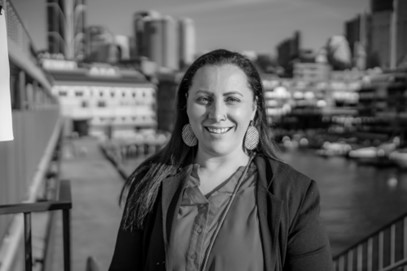
Corina Wayali Norman is a multidisciplinary artist with 30 years of experience. A Dharug/Dharawal woman, Corina blends traditional techniques with contemporary creativity across weaving, cultural adornments, jewellery, painting, drawing, wood carving and wood burning.
Her woven artworks become a narrative thread, blending cultural expressions to illustrate the living vitality of traditional and shared stories. Her work reflects a deep commitment to contributing to living culture while being innovative through diverse artist expressions.
“It’s been an honour to contribute to the M7 Motorway Art Collection alongside the Balarinji team and other artists. This project carries deep meaning because it tells the stories of Dharug Ngurra, our Country, through visual language. Each artwork reflects connection to Place and the living memory of our ancestors. Seeing these designs come to life on Country is both humbling and powerful. It reminds us that our culture is not of the past, but present and growing, embedded in the landscape and in the everyday journeys of people who travel these roads. The opportunity to share these stories publicly helps to strengthen understanding and belonging for all who pass through this place.
ARTWORK
Dyuguma (Dilly Bag)
Co-created by Corina Wayali Norman and Balarinji Studio.
-
JAMIE EASTWOOD – DHARUG
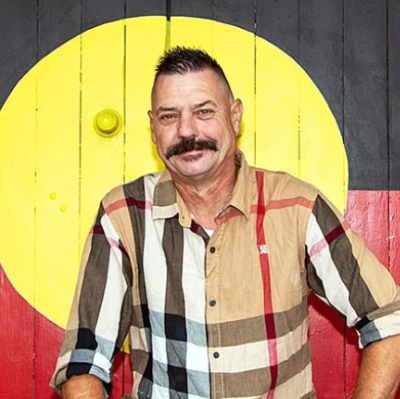
Jamie Eastwood is a Ngemba-Dharug man who has worked on both large and small-scale community art projects. Jamie has been a practising artist for more than 20 years, having lived and worked in the Sydney region throughout his life. Jamie has taught Aboriginal Art and Culture in universities, TAFEs and art schools around Australia. He is also an archaeological site officer on Aboriginal sites. As a visual artist, mainly using acrylic paint, his work has been exhibited widely. He has won several awards, including being named NSW Aboriginal Artist of the Year; the Centennial Medal award for service to the arts; and the Young Australian Citizen of the Year by Parramatta City Council.
Jamie has a wealth of experience, particularly in mural installations and designs, and loves to teach and pass on his skills and knowledge to others. He is passionate about telling the stories of his Aboriginal culture through art in both a traditional and non-traditional way and, by doing so, he hopes to keep the Dreaming alive.
“As a Dharug artist, my involvement working alongside Balarinji and the amazing cohort of other Indigenous artists on the M7/M12 project fills me with a sense of vibrant excitement. This remarkable initiative serves as a canvas for sharing our rich history and stories, intricately weaving them into the lifeblood of the community. It transcends infrastructure; it embodies a deep reverence for the land’s sacred significance and honours the wisdom of our ancestors. By bringing these compelling narratives to life for the public, we embark on a profound journey of reconciliation, nurturing understanding and respect for the tapestry of our shared heritage.”
ARTWORKS
Frontier Warriors
Co-created by Jamie Eastwood and Balarinji Studio.
Bayala Guwiyang (Yarning Around The Fire)
Co-created by Jamie Eastwood and Balarinji Studio.
Gili (Light)
Co-created by Jamie Eastwood and Balarinji Studio.
Frontier Warriors - Spears
Co-created by Jamie Eastwood and Balarinji Studio.
Sun, Moon, Coming Together
Co-created by Jamie Eastwood and Balarinji Studio.
Poppies
Co-created by Jamie Eastwood and Balarinji Studio. -
JASMINE SEYMOUR – DHARUG
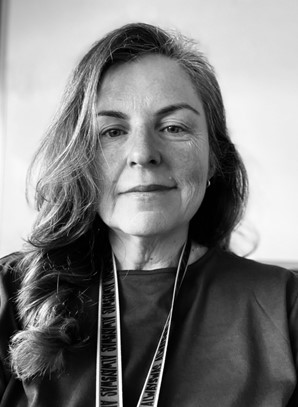
Jasmine Seymour is a Dharug woman belonging to the Burubirangal people. Jasmine is a descendant of Yarramundi through the Lock, Morley, Douglas, and Seymour families. Jasmine is a Dharug language teacher, Dharug language activist, an award-winning children's book author-illustrator, a primary school teacher and a language researcher. Jasmine supports Australian language education for all and works towards advocating for and promoting multilingual Indigenous Australia.
On Maria Lock:
“As a descendant of Maria Lock, the sculptures of Maria and Robert Lock are deeply significant, not only to Maria’s Dharug descendants and Western Sydney, but to us all as Australians. This artwork honours her resilience, strength and the barriers she broke in education and pursuing Aboriginal rights. I am very proud to share her story, this important part of history and celebrate her legacy that still resonates today.”On Light Horse Interchange artworks:
“Creating a companion narrative to the iconic Light Horse installation that tells the story of Aboriginal and Torres Strait Islander servicemen was a privilege. Bringing to light parts of our history that have been hidden and celebrating these experiences has been very rewarding.”On the Dharug language integration:
“Language is, I believe, one of the pathways to reconciliation. Having Dharug words prominently featured along the motorway is a powerful way for people to understand and explore language that has been alive for thousands of years. I am thrilled to see projects like this incorporating and celebrating Dharug language. Learning about the language of place and its people is something that all Australians should have some knowledge about.”ARTWORKS
Maria Lock and Robert on Dharug Country
Co-created by Jasmine Seymour and Balarinji Studio.
New Light Horse Interchange Artworks
Co-created by Jasmine Seymour and Balarinji Studio.
Nagaya Ngurra (My Country) (Shared User Path)
Co-created by Jasmine Seymour and Balarinji Studio.